


The Smoke Speaks : Africa Day 26'
Updated: 2 days ago
Africa Day was chaos. It was quiet. It was laughter. But more than anything it was stories, and this year the stories had heat. Dandji. The Duality of Fire. The theme didn't just sit on a wall somewhere looking pretty, it lived in the room. Every sector brought it, not as a concept but as a feeling you couldn't shake even after you left.
"Engaging and thought-provoking," said Mr. Everisto about the topics.
Students made it possible to live the scene. They prepared the setups, they lived in the roles, and even died in conflicts, genocides and fire. We couldn't stop but watch, Yewans running from one door to another, changing from a jacket to a blazer and searching for a balloon to explode, mimicking gun sounds.
The Fire This Time
DANDJI means fire in Songhai, a language spoken in Niger. ALA's Africa Day didn't try to put out that fire but stoked it even more. Rooms felt suffocating, but we knew we needed the glow to feel the stories our ancestors shared.
Now imagine all of our ancestors from South to North and from East to West sitting around the fire, but now together, geography collapsed and time stopped. They are talking about something we never knew, solutions we never imagined. Africa day was a chance to relive the moment of a specific ubiquitous African reunion. Students' presentations varied from past to modern issues; one thing persisted and felt needed in every presentation: they needed to find solutions, recommendations that work.
Africa Day was a quiet song that had no rhythm but rather chaos split between times and places and nations. Chaos that only makes sense when you smell the smoke speaking. From GBV in Tunisia to healthcare problems in Rwanda to illegal mining in Zambia, the fire burnt the foyer.
The Performances: Dying and Rising
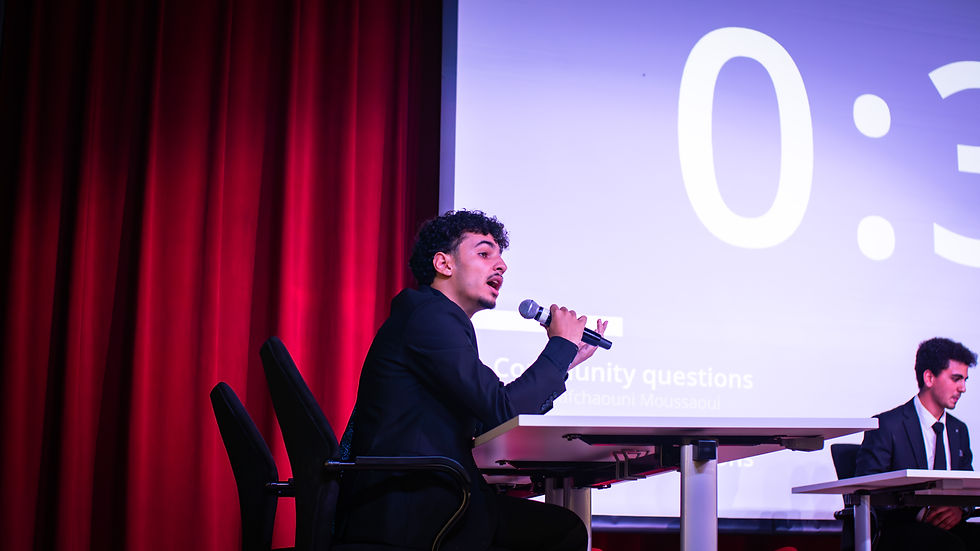
"Greeting fellow Rwandans," said Mr. Persi at 8 AM in the Baobab room after taking off a wig, a floral dress and a tummy. He moved from a pregnant woman in scene one to the president of Rwanda in the next scene.
Not far from that room, in LC Africa, Seluleko sarcastically entered Islam and then quickly logged out by the end of her presentation. Taking off the hijab felt dramatic, but wearing it for twenty minutes felt even more dramatic. We all know that Women in Egyptian Media wasn’t an easy topic for Selu from Eswatini. She stepped into a totally new adventure, given she comes from halfway across the continent. Jokingly, Africa Day made her experience a new religion.
LC 7 and 8 saw the rebirth of another version of Nelson Mandela. Not the forgiving statesman we know from African Studies, but a younger, angrier version, one from a South Africa we didn't learn about at ALA. In this South Africa, education wasn't a priority; it was an afterthought. Alcohol came first, before textbooks, before school fees, before breakfast. A reporter in the room raised a question, pointing to alcohol bottles everywhere. "What is that bottle?"
Wangari-like Mandela didn't flinch. She looked at the reporter, then at the room, and said quietly, "That's a bottle of holy water." Then she added, "Work in Progress."
She was reminding us of a whole Africa that always waits, stuck in a loading, in progress state, but never finished.
The Arts: Tears of Blood
The arts didn't come to tell stories. They came to make you feel something you didn't ask to feel. The Gukurahundi exhibition did exactly that. The judges were uneasy, and that was the whole point. "If you're comfortable with the problem, you are the problem." No sugarcoating. No easing you in. They called it Izinyembezi Zegazi tears of Blood. The blood of the victims dripping onto the audience until you realise you are not just watching. You are part of it. Claudina Taylor and David Baba had scripted something so carefully coordinated that the room stopped feeling like a presentation and became a theatre, every movement, every moment, deliberate. The visuals, the performance, the room itself worked together with such precision that it stopped being art you could evaluate and became something you had to reckon with. The judges didn't leave with critiques. They left with questions.
Governance: Four Names, One Country
The governance team did something similar but different. They brought South Africa into the room and made it impossible to look away. Mannenberg. Soweto. Sandton. Camps Bay. Four names. One country. You already know what the distance between them means. But they didn't just point fingers at the system; they pointed at the audience too. Nobody got to sit comfortably on the right side of the conversation.
They split the room into two. One side had fairy lights and green flowers, elites bathing in light like Greek gods who have never once thought about a power cut. The other side had papers and boxes and dirt and foldable tables holding up makeshift shacks. The same Eskom that plunges half the country into darkness while the other half barely notices. You felt it. You didn't need anyone to explain it to you. That's when you know something worked.
The smoke did not clear at the end of Africa Day. It lingered. Dandji is not only fire; it is the intense burning of a flame under the stars. A flame that ate the African soil. That flame was the continent's problems. The smoke was heavy, so we looked at the source of the fire, because that is how we start to rewrite stories.

Comments